Molin-Logo weiß
Contact us
Contact us

CLIMATE & RESOURCES

Our company's success relies on intentionally managing energy and materials. We continually strive to cut emissions, optimize resource use, and ensure our operations are environmentally friendly.

CLIMATE & RESOURCES

Reduce Scope 1 + 2 emissions by at least 70% by 2040 → Net zero by 2050
Conscious use of resources

• Energy consumption

• GHG emissions from the transport of goods

• Waste
• Carbon pricing
• Material shortages
• Increased demand for refrigeration technology

Key figures

(FY 2024)

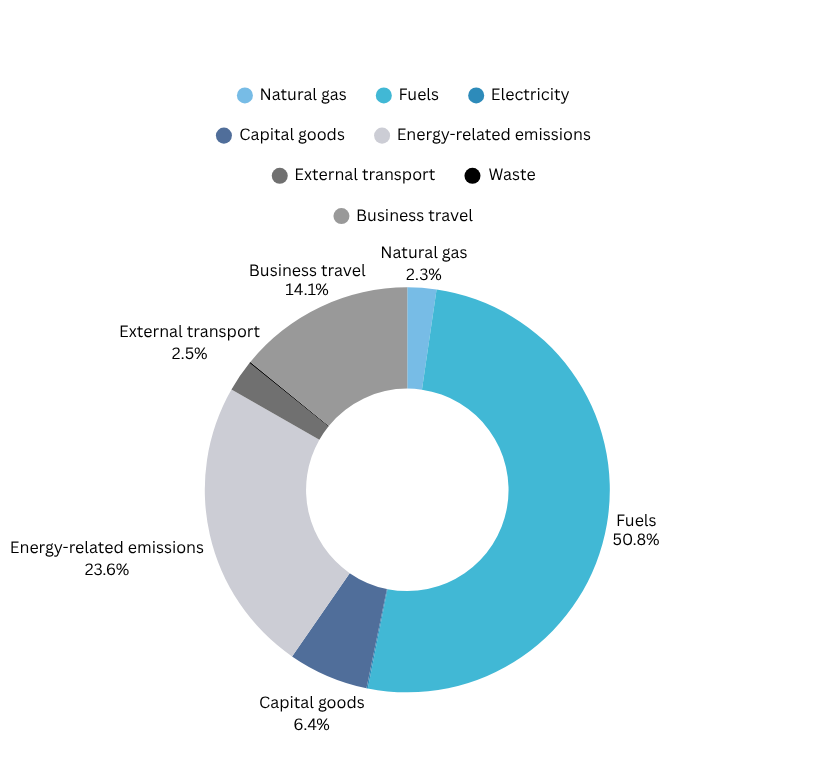
Most of our greenhouse gas emissions come from the fuel used by our vehicle fleet, while all of our locations are already using only green electricity. In 2024, our total energy consumption reached 1,073 MWh, with transport accounting for about two-thirds of that amount. We are now working on tracking additional indirect emissions (Scope 3) to give an even clearer picture of our carbon footprint going forward.

For a detailed breakdown of our greenhouse gas and energy data, please refer to the 2024 Sustainability Report.
Sustainabilityreport

EMISSION SOURCES

FY 2024 (market-based)

MEASURES, MILESTONES & CHALLENGES

OUR COMMITMENT TO CLIMATE PROTECTION

We are dedicated to reducing Scope 1 and 2 emissions by a minimum of 70% by 2040, with the goal of achieving net zero by 2050. Our strategic priorities include enhancing energy efficiency, advancing sustainable mobility, and promoting resource conservation through effective and results-driven initiatives.
Achievements to Date

Our accomplishments thus far include:
Utilisation of 100% green electricity across all sites
Installation of photovoltaic systems at both the Wels and Hartberg locations
Provision of electric vehicle charging stations for employees and visitors

Climate Protection Initiatives

We are gradually transitioning from gas to district heating and expanding our photovoltaic capacities, including the extension of the PV system in Wels by 2030.
We are actively advancing the electrification of our vehicle fleet. Furthermore, we are optimising travel planning and minimising business flights. Where feasible, we are utilising digital alternatives.
We are conducting a comprehensive analysis of material flows throughout our supply chain to specifically target reductions in Scope 3 emissions. One significant strategy is the increased adoption of prefabrication, which decreases transport distances and minimizes waste generation. Additionally, digitizing construction plans via tablets and planned enhancements to waste logistics facilitate improved efficiency and support resource conservation initiatives.

CHALLENGES

Collaboration with partners is essential, especially regarding Scope 3, which encompasses supply chains and construction sites. Through joint efforts, we devise strategies to progressively enhance climate and resource protection.

RESOURCES & CIRCULAR ECONOMY

We are currently implementing tangible measures: 
Through the use of prefabrication methods—especially in steel construction—we have achieved a notable reduction in waste generated on construction sites. Additionally, digitalisation is promoting resource efficiency, with numerous projects now being managed entirely paperlessly using tablets.
Going forward, we will continue to build on this strategy:

We are improving our waste logistics as part of expanding our operations, increasing prefabrication, and advancing digitalisation to reduce material usage and waste. Our next key step is to track our annual material flows, which will help manage resources more efficiently and allow us to report progress transparently. By doing so, we are establishing a solid foundation for sustainable resource use, resulting in less waste, lower environmental impact, and greater efficiency throughout all processes.
apartmentchart-barsleafearthsmileneutralsyncchevron-downchevron-down-circle