Molin-Logo weiß
Contact us
Contact us

Climate & Resources

The responsible use of energy and materials is central to our business success. We continuously work to reduce emissions, use resources more efficiently, and design our processes in a climate-friendly way.

KLIMA & RESSOURCEN

Reduce Scope 1 and 2 emissions by at least 70% by 2040 → Net zero by 2050
Responsible use of resources

• Energy consumption
• GHG emissions from the transport of goods
• Waste
• CO₂ pricing
• Material shortages
• Increased demand for refrigeration technology

Key figures

(FY 2024)

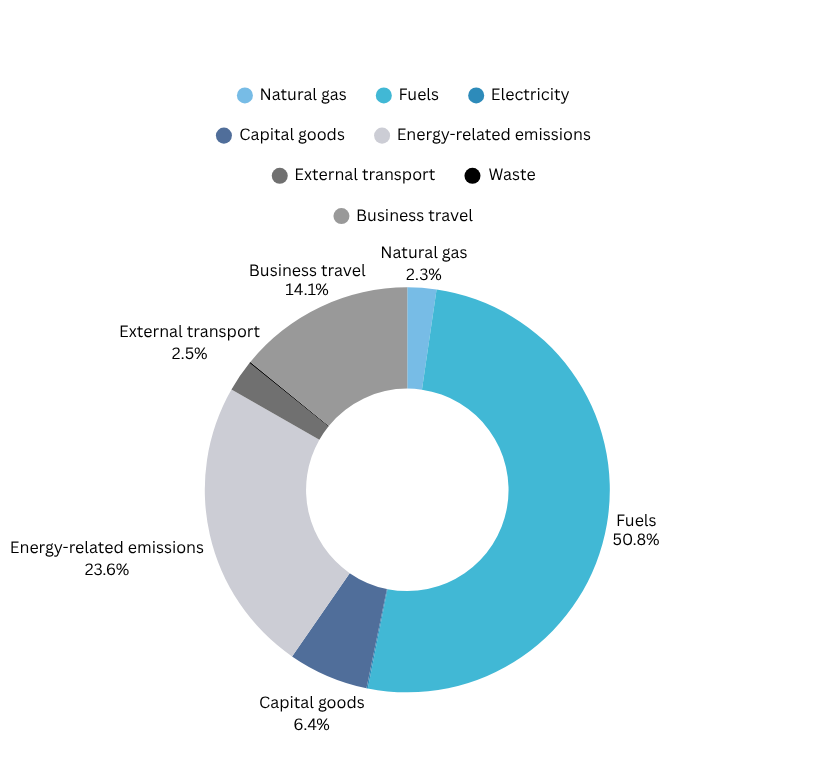
The majority of our greenhouse gas emissions result from fuel consumption within our vehicle fleet, while all locations are already supplied with 100% renewable electricity. Our total energy consumption in 2024 amounted to 1,073 MWh, of which around two thirds were attributable to mobility. We are currently working on capturing additional indirect emissions (Scope 3) in order to present our carbon footprint even more comprehensively in the future.
A detailed overview of our greenhouse gas and energy data can be found in the 2024 Sustainability Report.
Sustainabilityreport

Emission sources

FY 2024 (market-based)

Measures, Milestones & Challenges

Our commitment to climate protection

By 2040, we will reduce our Scope 1 and 2 emissions by at least 70% – and by 2050, we aim to achieve net zero. Our focus is clearly on energy efficiency, mobility, and resource conservation, with measures that deliver real impact.
Achievements to date
What we have already achieved:
100% renewable electricity across all our locations
Photovoltaic systems at our Wels and Hartberg sites
EV charging stations for employees and visitors

Climate protection measures

We are gradually transitioning from gas to district heating and expanding our photovoltaic capacities, including the extension of the PV system in Wels by 2030.
We are continuously advancing the electrification of our vehicle fleet. In addition, we are optimizing travel planning and reducing business flights. Wherever possible, we rely on digital alternatives.
We analyze our material flows along the supply chain in order to systematically reduce Scope 3 emissions. A key lever is the expansion of prefabrication, which reduces transport routes and avoids waste.
The digitalization of construction plans on tablets and the planned revision of waste logistics also contribute to greater efficiency and resource conservation.

Associated challenges

Especially in the area of Scope 3 – i.e. across supply chains and construction sites – we depend on close collaboration with our partners. 
Together, we develop solutions to continuously improve our climate and resource protection efforts.

Resources & circular economy

We are already taking concrete steps.
Through prefabrication, particularly in steel construction, we have been able to significantly reduce waste volumes on construction sites. The digitalization of construction sites also contributes to resource conservation, as many projects are now handled paperlessly via tablets.
Going forward, we will consistently build on this path:
We will optimize our waste logistics as part of our operational expansion, further expand prefabrication, and continue to advance digitalization in order to minimize material use and waste as effectively as possible. A key next step is the systematic recording of our annual material flows. This data foundation will enable us to manage resource efficiency more precisely in the future and to transparently disclose our progress. In this way, we are creating the basis for sustainable resource use—with less waste, reduced environmental impact, and greater efficiency across all processes.
apartmentchart-barsleafearthsmileneutralsyncchevron-downchevron-down-circle